What Is PAVE.gov.pk? Pakistan’s Federal E-Bike Scheme Explained
You went looking for the CM Punjab E-Bike Scheme and landed on pave.gov.pk instead. It happens constantly, because two different government electric-bike programs share overlapping branding and news coverage. Here’s what PAVE actually is, how it differs from the Punjab scheme, and which one you should be applying to.
What Is PAVE and Who Runs It?
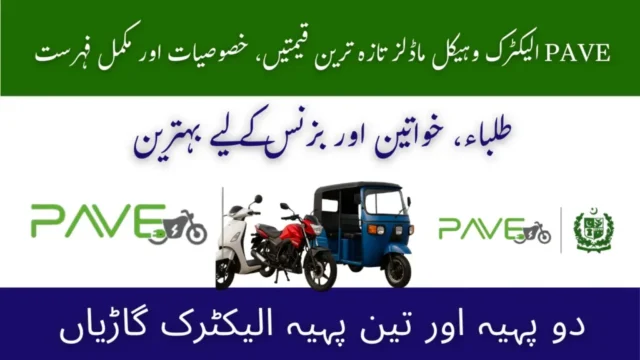
PAVE stands for the Pakistan Accelerated Vehicle Electrification Program. It’s a federal initiative approved by the Federal Cabinet on August 26, 2025, under the New Energy Vehicles (NEV) Policy 2025-30. Unlike the CM Punjab scheme, PAVE isn’t limited to one province — it’s a nationwide program open to citizens across Pakistan.
The Ministry of Industries and Production owns the policy, and day-to-day implementation runs through the Engineering Development Board (EDB), which coordinates with approved local manufacturers, partner banks, and the State Bank of Pakistan for subsidy transfers. The stated goal behind the policy is ambitious: 30% of new vehicle sales in Pakistan electric by 2030, rising to 50% by 2040.
PAVE vs. CM Punjab E-Bike Scheme: What’s the Real Difference?
PAVE is the federal government’s nationwide EV subsidy program, while the CM Punjab E-Bike Scheme is a separate, Punjab-only program that finances bikes through the Bank of Punjab for students, teachers, and provincial employees. They run on different portals, different budgets, and different selection systems, and being accepted into one has no bearing on the other.
| Feature | PAVE (pave.gov.pk) | CM Punjab E-Bike Scheme |
|---|---|---|
| Level | Federal | Provincial (Punjab only) |
| Runs through | Ministry of Industries & Production, via the Engineering Development Board | Government of Punjab, via the Bank of Punjab and PITB |
| Who can apply | Any Pakistani citizen aged 18-65, nationwide | Punjab students, teachers, and BPS 1-16 government employees |
| Portal | pave.gov.pk | bikes.punjab.gov.pk / ptf.punjab.gov.pk |
| Selection method | Computerized balloting in Phase 1; first-come-first-served in Phase 2 | Computerized e-balloting by district |
| Financing | Self-finance with subsidy reimbursement, or bank lease | Interest-free monthly installments through the Bank of Punjab |
How Much Subsidy Does PAVE Give on an Electric Bike?
This is the part where you need to be careful. Under Phase 1, the self-finance track reimbursed a subsidy per bike directly to the applicant’s account after purchase, verified through the State Bank of Pakistan. When Phase 2 was approved in May 2026, the Economic Coordination Committee revised the subsidy mechanism itself — instead of reimbursing the buyer afterward, the subsidy is now deducted upfront and paid straight to the manufacturer once delivery and registration are verified.
The number itself has moved between phases and news cycles. Different official updates and news reports have cited different per-bike amounts at different points in 2025 and 2026. Rather than repeat a figure that may already be outdated by the time you read this, confirm the current subsidy amount directly on pave.gov.pk or through the EDB helpline before you commit to a purchase or a bank lease.
Phase 2 also introduced a separate self-finance route specifically for federal government employees in BS-16 and below: a minimum down payment (reported around Rs. 10,000 for bikes and Rs. 100,000 for rickshaws), with the balance recovered interest-free through payroll deduction over 6 to 18 months.
Who Is Eligible for PAVE?
PAVE’s eligibility rules are deliberately broad compared to the CM Punjab scheme, which is restricted to specific categories within Punjab.
- You must be a Pakistani citizen with a valid CNIC.
- You must be between 18 and 65 years old.
- You must not have already received a vehicle under any other government EV scheme, federal or provincial — this disqualifies you outright.
- A driving license is required for electric rickshaws and loaders.
- For electric motorcycles, a license is preferred but not always mandatory at the application stage.
- Your registered mobile number must be active and in your own name.
- Women receive a 25% reserved quota — one of the largest gender quotas in a Pakistani government scheme of this kind.
- Overseas Pakistanis holding NICOP or POC documentation are also eligible.
Phase 2 widened the eligible categories further, adding SECP-registered non-banking financial companies and fleet operators alongside individual applicants — a sign the program is now also courting commercial adoption, not just personal use.
Phase 1 vs. Phase 2: What Actually Changed
Phase 1 targeted 41,000 vehicles (40,000 bikes and 1,000 rickshaws/loaders) and drew 269,149 applications — more than six times the available slots. A computerized ballot on October 1, 2025 selected the successful applicants, with the rest placed on a waiting list. By May 2026, progress reports showed a real bottleneck: of 44,689 applications forwarded to partner banks under the lease scheme, only 4,075 loans had actually been approved.
That backlog is exactly what Phase 2 was designed to clear. The Economic Coordination Committee approved a Rs. 9 billion package for FY2025-26 and replaced computerized balloting with a first-come-first-served mechanism — Phase 1 waitlisted applicants are prioritized by their original application timestamp, then new applicants are processed in submission order. The overall FY2025-26 target sits at 119,170 vehicles (116,000 bikes, 3,170 rickshaws/loaders), with the remaining 76,000 bikes and 2,170 rickshaws/loaders in Phase 2 going to applicants beyond the Phase 1 allocation.
Verification also changed: the earlier requirement for 100% third-party verification was replaced with a risk-based model using biometric checks, photographic evidence, and digital validation through the portal itself — meant to speed up processing without removing oversight entirely.
How to Apply at pave.gov.pk
- Go to pave.gov.pk directly — never through a link shared on WhatsApp or social media.
- Register using your CNIC and an active mobile number registered in your own name, then verify the OTP sent to your phone.
- Fill in your personal details exactly as they appear on your CNIC — mismatches are one of the most common causes of rejection.
- Select your vehicle type: electric bike, rickshaw, or loader.
- Choose your preferred approved manufacturer (OEM) from the official list.
- Pick your financing route: self-finance with subsidy reimbursement, or bank lease.
- Upload the required documents — CNIC scan, photograph, and any category-specific proof (driving license, employment or student verification).
- Wait for verification and, where applicable, selection under the current allocation method.
Common Mistakes That Delay or Reject PAVE Applications
- Applying through a third-party website or a WhatsApp “agent” instead of pave.gov.pk directly — the official program never charges an agent fee or asks for OTPs over chat.
- Registering with a SIM that isn’t in your own name — this fails verification almost every time.
- Applying for a rickshaw or loader category without a valid driving license.
- Not disclosing a vehicle already received under a provincial scheme, which gets caught during verification and can delay the whole application.
- Assuming PAVE and the CM Punjab scheme are the same program and applying to the wrong portal for your actual situation — a Punjab student living in a Phase-2 district may genuinely have both open to them, but a federal BS-16 employee should be looking at PAVE’s own self-finance track, not the Punjab portal.
Which One Should You Actually Apply To?
If you’re a student, teacher, or provincial government employee in Punjab, the CM Punjab E-Bike Scheme through the Bank of Punjab is usually the better fit — it’s built specifically for you, with 0% markup installments deducted from salary or stipend. If you’re a federal employee, an overseas Pakistani, a small business owner, or simply not covered by any Punjab-specific category, PAVE at pave.gov.pk is the program to register on. There’s no penalty for checking eligibility on both and applying to whichever one — or both — you genuinely qualify for.
Frequently Asked Questions
Is pave.gov.pk the same as the CM Punjab E-Bike Scheme?
No. PAVE is a federal program run by the Ministry of Industries and Production and open to citizens nationwide, while the CM Punjab E-Bike Scheme is a separate Punjab-only program run through the Bank of Punjab for students, teachers, and provincial government employees.
Can I apply to both PAVE and the CM Punjab E-Bike Scheme?
Yes, as long as you meet the eligibility rules for each program separately and haven’t already received an electric vehicle under any government EV scheme. Being selected in one doesn’t automatically disqualify you from the other.
Do I need a driving license to apply for PAVE?
A driving license is required for electric rickshaws and loaders. For electric motorcycles, a license is preferred but not always mandatory at the application stage, though partner banks may still require one before disbursing financing.
How much subsidy does PAVE give on an electric bike?
The subsidy amount has changed between phases and has been reported differently across program updates, so treat any figure you see online as provisional and confirm the current amount directly on pave.gov.pk before making a purchase decision.
What changed between PAVE Phase 1 and Phase 2?
Phase 2 replaced computerized balloting with a first-come-first-served process, prioritizing Phase 1 waitlisted applicants by their original application timestamp before opening new applications, and it expanded eligibility to include overseas Pakistanis, SECP-registered NBFCs, and fleet operators.
Where can I check my PAVE application status?
Status checks should only be done through the official pave.gov.pk portal. Third-party sites or WhatsApp agents offering to check or guarantee your status are not affiliated with the government program, and treating any such offer as legitimate puts your CNIC data at risk.
The Bottom Line
PAVE and the CM Punjab E-Bike Scheme solve the same problem — expensive fuel, long commutes — through two completely separate government channels. Know which one actually applies to you before you register, verify every number on the official portal rather than a search result, and you’ll avoid the wasted applications that stalled thousands of people in Phase 1.
Suggested Internal Links (ebikespunjab.blog)
- blog/eligibility — anchor text: “see the full eligibility guide”
- blog/installment-plans — anchor text: “compare the installment plans”
- blog/how-to-apply — anchor text: “step-by-step application walkthrough”
Suggested Image Placements & Alt Text
- “pave.gov.pk official federal electric bike scheme portal homepage”
- “comparison chart of PAVE federal scheme versus CM Punjab e-bike scheme eligibility”
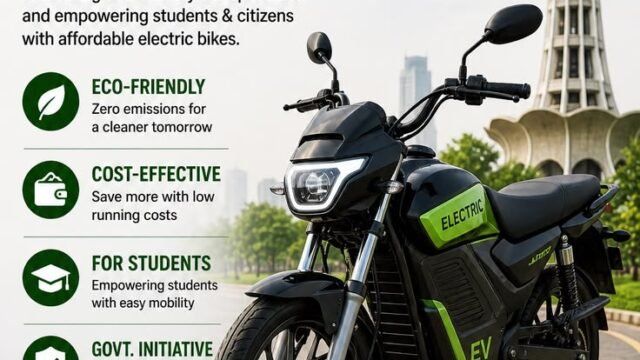
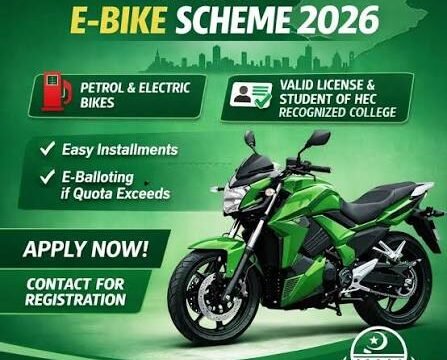
- “electric motorcycle eligible for Pakistan’s PAVE subsidy program”
FAQs
Is pave.gov.pk the same as the CM Punjab E-Bike Scheme?
No. PAVE is a federal program run by the Ministry of Industries and Production and open to citizens nationwide, while the CM Punjab E-Bike Scheme is a separate Punjab-only program run through the Bank of Punjab for students, teachers, and provincial government employees.
Can I apply to both PAVE and the CM Punjab E-Bike Scheme?
Yes, as long as you meet the eligibility rules for each program separately and haven’t already received an electric vehicle under any government EV scheme. Being selected in one doesn’t automatically disqualify you from the other.
Do I need a driving license to apply for PAVE?
A driving license is required for electric rickshaws and loaders. For electric motorcycles, a license is preferred but not always mandatory at the application stage, though partner banks may still require one before disbursing financing.
How much subsidy does PAVE give on an electric bike?
The subsidy amount has changed between phases and has been reported differently across program updates, so treat any figure you see online as provisional and confirm the current amount directly on pave.gov.pk before making a purchase decision.
What changed between PAVE Phase 1 and Phase 2?
Phase 2 replaced computerized balloting with a first-come-first-served process, prioritizing Phase 1 waitlisted applicants by their original application timestamp before opening new applications, and it expanded eligibility to include overseas Pakistanis, SECP-registered NBFCs, and fleet operators.
Where can I check my PAVE application status?
Status checks should only be done through the official pave.gov.pk portal. Third-party sites or WhatsApp agents offering to check or guarantee your status are not affiliated with the government program, and treating any such offer as legitimate puts your CNIC data at risk.