Electric bikes are becoming an important part of Pakistan’s efforts to provide affordable and environmentally friendly transportation. Punjab has already introduced an e-bike initiative for students, while interest in similar schemes in Khyber Pakhtunkhwa (KP) continues to grow.
But which province currently offers more to students? Let’s compare the available information about the Punjab and KP e-bike schemes and see where the stronger opportunity exists.
Punjab E-Bike Scheme
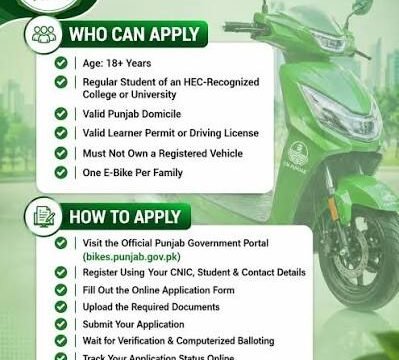
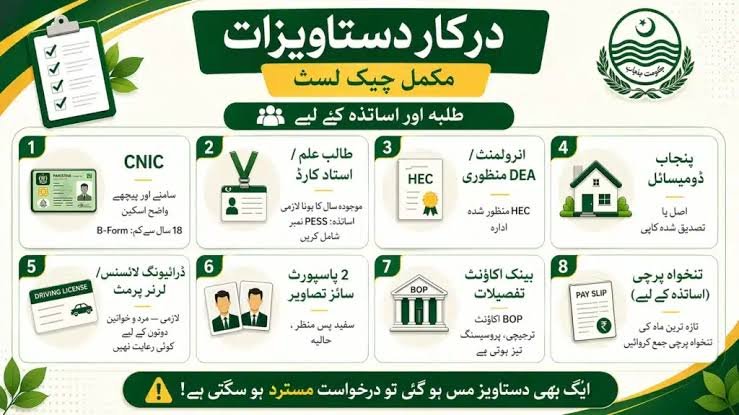
The Punjab Government’s CM e-Bikes Scheme is designed to help students obtain electric bikes through a subsidized program. According to the Punjab Government, eligible applicants must generally be at least 18 years old, enrolled as regular students in an HEC-recognized degree college or university, and have a valid motorcycle learner’s permit or driving licence.
Punjab’s original student bike program included 20,000 bikes, including 1,000 electric bikes and 19,000 petrol bikes. The bikes were offered through interest-free monthly installments, with the government covering the interest cost in collaboration with the Bank of Punjab.
The Punjab Government later announced a much larger target of providing up to 100,000 e-bikes to students, showing that the province intends to expand electric mobility among young people.
Another advantage of Punjab’s approach is the development of supporting infrastructure. The Higher Education Department has announced plans to solarize 355 public colleges, including the installation of EV charging stations for students’ electric bikes.
KP E-Bike Scheme
Khyber Pakhtunkhwa has also seen growing interest in electric transportation and student-focused mobility initiatives. However, as of August 2026, there is not enough verified official information available to establish a directly comparable province-wide KP e-bike scheme with the same confirmed scale, eligibility structure and implementation details as Punjab’s program.
This distinction is important because several websites and social media pages may describe proposed or expected schemes as if registration is already open. Students should verify any KP e-bike announcement through an official KP Government department before submitting personal information or paying any fee.
KP vs Punjab E-Bike Scheme Comparison
| Feature | Punjab | KP |
|---|---|---|
| Student e-bike initiative | Established government program | No comparable province-wide scheme could be verified |
| Electric bike focus | Yes | Official details not sufficiently verified |
| Student eligibility | Defined criteria | Details not confirmed |
| Installment/subsidy structure | Government-supported | Not confirmed |
| Large-scale target | Up to 100,000 e-bikes announced | Not confirmed |
| EV charging infrastructure | Planned at public colleges | Not confirmed |
| Official application information | Available through Punjab Government channels | Verify through KP Government before applying |
Which Province Offers More?
Based on currently verified information, Punjab offers the stronger and more clearly established e-bike opportunity.
Punjab has already implemented a student bike program, introduced electric bikes, provided government support for financing, and announced a much larger expansion of e-bikes. The province is also working on EV charging infrastructure at public colleges.
KP may introduce or expand similar initiatives in the future, but without confirmed official details about the number of bikes, subsidy, eligibility requirements and application dates, it would be misleading to claim that KP currently offers a better package.
Why Punjab’s Scheme Stands Out
One of the biggest advantages of Punjab’s scheme is that it is not limited to simply providing an electric bike. The government has also focused on affordability and infrastructure.
The original program was structured around interest-free financing, while the newer e-bike initiative provides a subsidy to make electric transportation more accessible to students. Punjab has also emphasized equal participation of male and female students in its bike distribution programs.
The development of charging facilities is another important factor. Without convenient charging points, the practical benefits of an electric bike can be reduced. Punjab’s plan to install EV charging stations at public colleges could therefore make the scheme more useful for students in the long term.
Final Verdict
If you are comparing the two provinces based on currently verified information, Punjab is ahead in terms of the scale, implementation, student eligibility framework and supporting infrastructure of its e-bike initiatives.
KP students should not assume that a social media advertisement or unofficial website represents an active government scheme. Before applying, always check whether the announcement comes directly from an official government source.
As more details become available from the KP Government, the comparison can be updated to include the exact number of bikes, subsidy amount, eligibility criteria, registration dates and financing terms.
In short: Punjab currently offers the more clearly established e-bike opportunity, while KP’s position depends on the details of any officially announced future program.
1. What is the CM Punjab E-Bike Scheme?
The CM Punjab E-Bike Scheme is a government initiative designed to help eligible students obtain electric bikes through a subsidized and interest-free financing arrangement.
2. Who can apply for the Punjab E-Bike Scheme?
Generally, students who meet the scheme’s eligibility requirements can apply. Applicants must meet the applicable age, student status, residence and motorcycle licence or learner permit requirements.
3. What is the minimum age for the e-bike scheme?
Applicants generally need to be 18 years or older to qualify under the student bike program.
4. Do I need a driving licence?
Applicants are required to have a valid motorcycle driving licence or learner’s permit according to the applicable scheme requirements.
5. Can female students apply for the e-bike scheme?
Yes. Female students are eligible to participate in the Punjab student bike initiative if they meet the applicable eligibility requirements.
6. Is the Punjab E-Bike Scheme interest-free?
Yes. The financing arrangement introduced by the Punjab Government is based on interest-free installments, with the government supporting the financing cost.
7. How much is the monthly e-bike installment?
The exact installment depends on the bike price, subsidy and financing terms. The Punjab Government originally stated that the monthly installment for an e-bike would be less than Rs. 10,000.
Applicants should verify the final payment schedule before accepting financing.
8. How much subsidy is available on an electric bike?
The subsidy can depend on the applicable phase and financing structure of the scheme. Students should check the latest official announcement for the current subsidy amount rather than relying on outdated figures.
9. Can I choose the electric bike myself?
The available bike models and selection process depend on the approved scheme and participating vendors. Applicants should check the options provided through the official application process.
10. Is there a down payment?
The required down payment can depend on the financing arrangement and bike selected. Applicants should check their official financing documents for the exact amount.
11. What documents are required?
Applicants may need documents such as:
- CNIC or B-Form where applicable
- Student identification
- University or college enrollment information
- Motorcycle learner’s permit or driving licence
- Proof of residence where required
- Other information requested during the official application
The exact document requirements can change, so applicants should check the latest official instructions.
12. Can university students apply?
Yes. The program is aimed at eligible students enrolled in recognized colleges and universities, subject to the scheme’s current eligibility conditions.
13. Can private university students apply?
Eligibility depends on whether the student’s institution meets the recognition and other requirements specified by the scheme.
14. Can college students apply?
Eligible students enrolled in qualifying degree colleges can apply if they satisfy the other requirements.
15. Is the e-bike completely free?
No. The e-bike is not generally provided completely free of cost. Eligible students receive government support through subsidy and financing, while the remaining amount is paid according to the approved installment plan.
16. How can I apply for the CM Punjab E-Bike Scheme?
Applicants should use the official Punjab Government e-bike application channel when registration is open. Avoid paying unofficial agents who claim they can guarantee approval.
17. How are applicants selected?
Where applications exceed the available number of bikes, the government may use a transparent selection or balloting process according to the applicable phase of the scheme.
Applicants should check the official announcement for the selection procedure.
18. Is there insurance or warranty for the e-bike?
The Punjab Government has announced battery warranty and insurance-related support as part of the e-bike project. The exact coverage should be checked in the applicable terms and conditions.
19. Can I sell the e-bike after receiving it?
Students should not assume that the bike can immediately be sold or transferred. Financing agreements and scheme terms may contain restrictions. Check the official terms before transferring ownership.
20. Where can I check the latest Punjab E-Bike Scheme information?
The safest option is to check official Punjab Government announcements and the official e-bike application portal. Information from social media pages or unofficial websites may be outdated or incorrect.
Final Thoughts
The CM Punjab E-Bike Scheme can help eligible students reduce their transportation costs by providing access to electric bikes through government-supported financing.
However, eligibility requirements, available bikes, subsidy amounts, application dates and installment terms can change between different phases of the program. Students should always verify the latest information through official government sources before submitting an application or paying anyone for assistance.