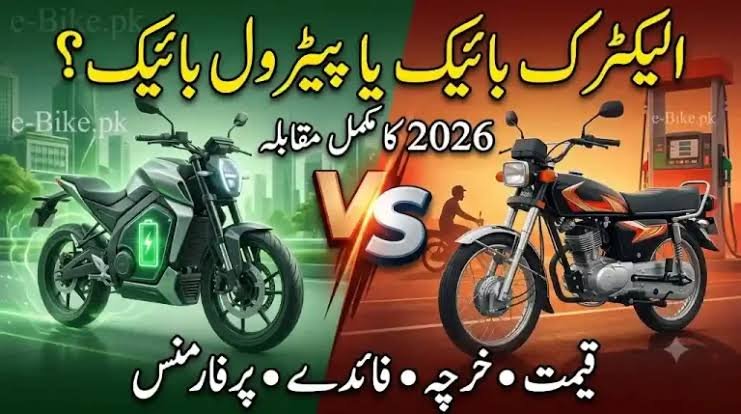
Choosing between an electric bike and a petrol motorcycle is not only about the purchase price. For a student or daily commuter, the real cost over five years includes installments, fuel, electricity, maintenance and other running expenses.
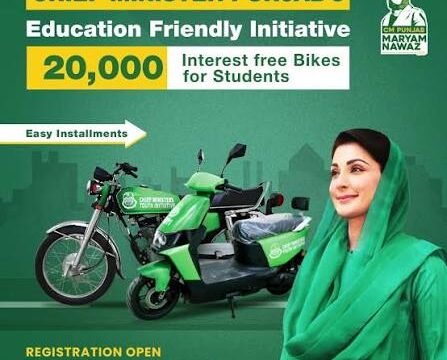
The CM Punjab E-Bike Scheme makes this comparison particularly interesting because the Punjab Government introduced student bikes through interest-free monthly installments and later announced a much larger e-bike program.
So, over five years, which option can be cheaper: an e-bike or a petrol bike?
CM Punjab E-Bike Scheme vs Petrol Bike
The original Punjab student bike program announced in March 2024 included 19,000 petrol bikes and 1,000 electric bikes. The government stated that the petrol-bike installment would be Rs. 5,000 per month, while the e-bike installment would be less than Rs. 10,000 per month. The government would bear the financing interest in collaboration with the Bank of Punjab.
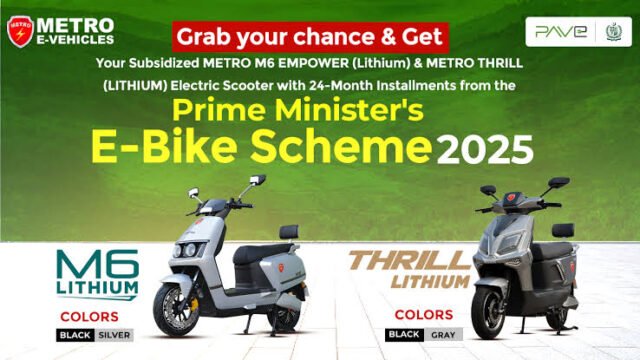
Later, in December 2024, the Punjab Government announced a much larger target of providing 100,000 e-bikes to students across Punjab.
For a five-year comparison, however, we need to separate the financing cost from the running cost.
What Does the 5-Year Cost Include?
A realistic comparison should include:
- Monthly installment
- Petrol or electricity
- Routine maintenance
- Battery-related expenses
- Oil changes for petrol bikes
- Tyres and other wear items
- Registration and insurance where applicable
The actual cost will vary depending on the bike model, distance travelled, electricity tariff, petrol price and maintenance requirements.
Petrol Bike Cost Over 5 Years
The original Punjab scheme announced a petrol-bike installment of Rs. 5,000 per month. If this monthly amount were paid for 24 months, the financing payments would total:
Rs. 5,000 × 24 = Rs. 120,000
This does not represent the full five-year ownership cost. After the financing period, the owner still has to pay for petrol and maintenance.
Petrol Fuel Cost Example
Suppose a student travels:
40 km per day
and uses the bike for approximately:
26 days per month
Monthly distance would be:
40 × 26 = 1,040 km
Assuming a petrol motorcycle delivers approximately 40 km per litre, monthly fuel consumption would be:
1,040 ÷ 40 = 26 litres
If petrol costs Rs. 300 per litre, the monthly fuel expense would be:
26 × Rs. 300 = Rs. 7,800
Over one year:
Rs. 7,800 × 12 = Rs. 93,600
Over five years:
Rs. 93,600 × 5 = Rs. 468,000
This is an illustrative calculation. Petrol prices and fuel economy can change significantly.
E-Bike Running Cost Over 5 Years
Electric bikes do not require petrol. Instead, their primary energy expense is electricity.
Suppose an e-bike uses approximately 2 kWh of electricity for a full charge and provides enough range for the rider’s daily travel.
If the electricity cost for one full charge were Rs. 80, and the rider charged the bike approximately 26 times per month:
Rs. 80 × 26 = Rs. 2,080 per month
Annual charging cost:
Rs. 2,080 × 12 = Rs. 24,960
Five-year charging cost:
Rs. 24,960 × 5 = Rs. 124,800
Again, this is an example rather than an official cost. Actual charging costs depend on battery capacity, charging losses, electricity tariffs and daily mileage.
5-Year Running Cost Comparison
Using the example above:
| Expense | Petrol Bike | E-Bike |
|---|---|---|
| Example financing payments | Rs. 120,000 | Depends on approved terms |
| 5-year fuel/electricity example | Rs. 468,000 | Rs. 124,800 |
| Fuel/oil requirement | Yes | No petrol or engine oil |
| Engine maintenance | Yes | No |
| Battery consideration | No traction battery | Yes |
| Running-cost trend | Higher | Lower |
The biggest difference is the daily energy cost.
A petrol motorcycle requires fuel every time it is used, while an e-bike uses electricity. For a high-mileage student or commuter, this difference can become substantial over several years.
What About Maintenance?
Maintenance is another important difference.
Petrol Bike Maintenance
A conventional motorcycle normally requires:
- Engine oil
- Oil filter or strainer service
- Air-filter maintenance
- Spark plug replacement
- Engine and transmission-related servicing
- Chain and sprocket maintenance
- Brake maintenance
- Tyres
These costs accumulate over time.
E-Bike Maintenance
An electric motorcycle generally has fewer mechanical components because it does not have a conventional internal-combustion engine.
Typical maintenance may include:
- Brake pads
- Tyres
- Suspension components
- Chain or drivetrain components where applicable
- Electrical inspection
- Battery maintenance or replacement when required
The absence of engine oil and many engine components can reduce routine maintenance costs.
The Battery Is the Biggest E-Bike Cost Concern
Although e-bikes can have lower running costs, the battery is an important long-term consideration.
Battery life depends on:
- Battery chemistry
- Charging habits
- Temperature
- Number of charging cycles
- Usage
- Storage conditions
- Manufacturer quality
A battery may eventually need replacement, and the replacement cost can significantly affect the five-year ownership calculation.
Therefore, an e-bike should not be described as completely maintenance-free.
Five-Year Example
Using the illustrative figures above, the energy-cost difference alone would be:
Petrol bike fuel cost: Rs. 468,000
E-bike electricity cost: Rs. 124,800
Potential difference:
Rs. 343,200
This does not mean every e-bike owner will save exactly Rs. 343,200. It is an example based on assumed mileage, fuel economy, charging frequency and electricity cost.
Actual savings could be higher or lower.
Which Bike Is Cheaper for Students?
For students who travel long distances every day, an e-bike can have a major running-cost advantage.
The biggest reason is simple:
Electricity is generally cheaper per kilometre than petrol.
However, the initial financing amount, battery replacement cost and available charging facilities must also be considered.
A student who travels only a few kilometres per day may see smaller savings, while someone commuting 30–50 km every day could potentially save much more on energy costs.
E-Bike vs Petrol Bike: 5-Year Pros and Cons
E-Bike Advantages
- Lower energy cost
- No petrol required
- No engine oil
- Fewer mechanical engine components
- Quieter operation
- Lower local emissions
- Suitable for daily student commuting
E-Bike Disadvantages
- Battery replacement can be expensive
- Charging access is important
- Charging takes longer than refuelling
- Range depends on battery capacity
- Battery performance can decline over time
Petrol Bike Advantages
- Quick refuelling
- Petrol stations are widely available
- Long-distance travel is easier
- Familiar maintenance network
- No dependence on charging infrastructure
Petrol Bike Disadvantages
- Continuous petrol expense
- Engine oil and routine servicing
- Higher mechanical maintenance
- Fuel prices can increase
- Produces exhaust emissions
Which One Wins Over 5 Years?
For a student who uses the bike regularly, the e-bike can offer a lower long-term running cost, especially when daily mileage is high.
The petrol bike, however, can still be more convenient for riders who frequently travel long distances or do not have reliable access to charging.
The best choice therefore depends on usage rather than purchase price alone.
Important Point About CM Punjab E-Bike Financing
The Punjab Government’s official scheme information should be used when calculating the actual financing cost for an applicant. The original 2024 announcement specified Rs. 5,000 monthly installments for petrol bikes and less than Rs. 10,000 for e-bikes, but these figures should not automatically be treated as the current 2026 payment schedule.
Students should check their approved bike, subsidy, down payment and repayment schedule before calculating the final five-year ownership cost.
Final Verdict
If your main priority is lower running cost, the CM Punjab E-Bike Scheme can be more attractive than a petrol bike.
The five-year advantage becomes particularly noticeable for students who travel long distances every day. Petrol costs can add up quickly, while an e-bike mainly requires electricity for energy.
However, the comparison should include the cost of the battery, maintenance and financing. An e-bike is not automatically cheaper in every situation.
For a student with regular daily travel, home charging and access to a suitable e-bike, the electric option is likely to provide the stronger five-year running-cost advantage.
Related searches: CM Punjab E-Bike Scheme vs Petrol Bike, Punjab E-Bike Scheme 2026, e-bike vs petrol bike cost, electric bike running cost Pakistan, petrol bike 5 year cost, Punjab student bike scheme, CM Punjab e-bike installment, e-bike electricity cost Pakistan.